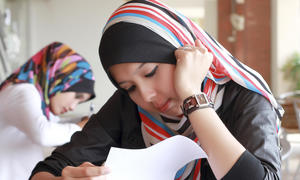
Many people in United States hold the mistaken belief that LGBTQ people and Muslims are fundamentally at odds. As educators, we can teach the reality that LGBTQ Muslims exist and honor the voices of this identity group.
Media literacy — being able to access, analyze and evaluate information for accuracy and reliability across a variety of mediums — is crucial for us to make informed decisions.
The willingness to learn, the active step of acknowledging and affirming LGBTQ+ students, and empathy in recognizing the difficulties for the young person help create safer spaces for trans and nonbinary children.
For some people, speaking up in public feels more difficult than any other setting. For others, speaking up in public — to strangers who have no power or ties to one's home or work life — feels easier.
The workplace is, for some, the only place they experience diversity. For those who live in segregated neighborhoods, attend segregated houses of worship or take part in segregated hobbies or activities, work becomes the only place they interact with people of varied and diverse backgrounds. It often is, for these people, a testing ground.
While we as a society work together for solutions to end mass violence, we educators need to rethink how we teach masculinity through our deeds and actions.