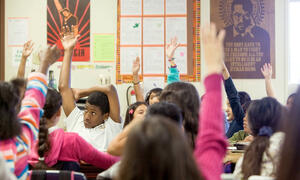
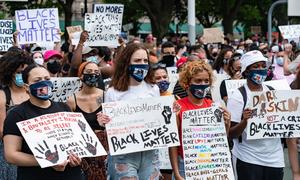
When students witness activist resistance to injustices in their own communities, it helps them better understand a core component of social justice education.
As an educator, you’re likely prioritizing your students to help them cope with the latest act of deadly violence. It’s important to take care of yourself, too.
Rosalie Franks is a professor of writing, literature and philosophy at Roger Williams University in Bristol, Rhode Island. She designs lessons that inspire students to examine their values and to take action on social issues. A graduate of Smith College in English literature, she earned her master’s degrees in childhood education and curriculum development from Teachers College, Columbia University and her doctorate in humanistic education from Boston University. Early in her career, Rosalie was a fourth-grade teacher on Boston’s WGBH TV.
Pam Watts writes, teaches and blogs about childhood adversity and children’s books. She is an expert in graphic novels, and first became interested in them when she studied them in the Writing for Children & Young Adults program at Vermont College of Fine Arts. Since then, she has spoken about graphic novels to audiences of other writers and teachers, and she can often be found in dark corners scribbling her own. She lives in Santa Fe, New Mexico.
One Learning for Justice staffer reflects on the harm she experienced when her educators ignored Black History Month—and calls on all educators to uplift the value in Black history all year.