Thomas Bean is a professor in literacy/reading. Dr. Bean is considered a leading scholar in content area literacy. He is the co-author of 15 books, 21 book chapters, and 88 journal articles. He currently serves as co-editor of the International Reading Association Literacy Studies Series centering on the publication of high quality research monographs. He was recently honored with the UNLV College of Education Distinguished Research Award for his studies of reader responses to multicultural young adult literature in content area classrooms. He is the co-author of the International Reading
This lesson, part of the Digital Literacy series, focuses on teaching students to identify how writers can reveal their biases through their word choice and tone. Students will identify “charged” words that communicate a point of view. Students will understand how writers communicate a point of view implicitly by writing their own charged news stories.
Let’s talk about voting. Yesterday, we asked our 65,000 Facebook followers if they had held mock elections in their schools. We heard from one lone voice that reported her middle school had 100 percent turnout.
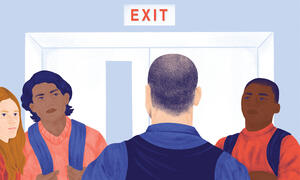
As we planned for Mix It Up at Lunch Day last year, I felt a deep sense of nervousness. I wasn’t worried about getting the kids to talk and chat. I teach at a small school, and the students are usually friendly with one another.
Bao Ong is a freelance writer who lives in New York City. Before becoming a contributing writer at The New York Times, he covered education for the St. Paul Pioneer Press.
In my eighth-grade language arts classroom, we use discussion as a vehicle for learning, thinking, writing, posing and defending arguments, questioning and reviewing—just about everything. And as can be expected, we sometimes digress from the topic at hand.
In 1964, my third-grade teacher relied mainly on an air of motherly authority to maintain control over her classroom of more than 50 8-year-olds. But when pushed, she warned darkly of deploying her spanking machine.