Mari and her family have been sent to an internment camp in Utah. She does not understand what they have done to deserve their internment and longs for her backyard in California where she used to grow sunflowers.
In this excerpt, Garang tells his story of how he became a lost boy when war destroyed his village. Walking with thousands of other orphaned boys, Garang travels thousands of dangerous miles from southern Sudan to a refugee camp in Ethiopia.
by
Mary Williams and R. Gregory Christie (illustrator)
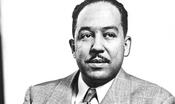
Langston Hughes, a voice of the Harlem Renaissance, writes of a black man banished to the kitchen when company arrives. This same man looks to the future, for a day when he will sit at the table to eat with company, because he, too, is an American.
'Henry Brown left Richmond, Va. a slave and arrived in Philadelphia—in a freight box—a free man. Abolitionists who cheered Brown's 27-hour journey to freedom chose not to publicize it, fearing that others following in his path would be in danger.
The first Black Southerner to have a book of poetry published, Horton's plea for freedom personifies liberty and beseeches her to stamp out oppression and break his chains.
Enacted in 1882, the Chinese Exclusion Act, formally titled “An Act to execute certain treaty stipulations relating to Chinese,” was one of the first laws limiting immigration into the United States.