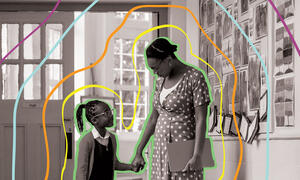
Educators have a role in ending discipline that criminalizes youth. Reforms, including trauma-informed and restorative practices, can disrupt the school-to-prison pipeline.
Shelton is a first-grade teacher and author of Child of the Civil Rights Movement. She lives in Washington, D.C. with her husband and three sons. She is dedicated to spreading the truth about our American history.
Today, the White House and Justice Department potentially closed a door on some of the United States’ most vital and courageous individuals. As educators, this is not an issue we can ignore.
In early September 1957, nine African-American students faced a violent mob when they attempted to enter the newly desegregated Little Rock Central High School in Little Rock, Ark.. President Dwight D. Eisenhower signed this executive order on September 23, 1957 to enforce an orderly desegregation.
In this lesson, students will read an excerpt of an interview given by Mary McLeod Bethune and will learn that she founded the Daytona National and Industrial School for Negro Girls (now Bethune-Cookman College) in 1904. Through close reading, they will explore and discuss connections between events from Bethune’s life experiences and their own lives, and connections between past and current events.
Is your classroom a calm, relaxing day or a violent, destructive storm? Is it sunny, cloudy or rainy? Is it frigidly cold? Are you a calm, refreshing breeze or a tornado?
The time had come. It was Dec. 1, 1955, when Rosa Parks refused to give up her seat to a white passenger on the Montgomery public bus. This act led to Parks’ arrest, ignited the Montgomery Bus Boycott and ushered in the new civil rights movement.
A young boy travels with his grandmother to place a “Lost Friends” ad searching for his uncle who was sold by his enslaver and separated from his family before the Civil War.