Three years ago, a young activist used social media to put her idea into practice. Now her effort to honor Native people is an international event—and it keeps growing.
After learning an important lesson about student engagement as a classroom teacher, this teacher educator passed it on to her pre-service teachers: Focus on connecting with students versus trying to control them.
This after-school educator developed a creative set of discussion questions and prompts to help students talk about empathy. Her tools? A young adult novel, the Teaching Tolerance Anti-bias Framework and Perspectives for a Diverse America.
When two sides fail to come together after a classroom election, the teacher institutes the 100 Days plan to try to keep the newly elected accountable and the remaining students apprised of what they can expect from their new president.
Linda Schubert recounts the fear that consumed her Jewish family living in Nazi-Germany in the late 1930s. Each family member endured individual stress and anxiety, but each also contributed to the family's greater good of the family.
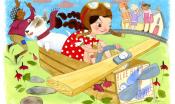
Tamera Bryant relays the story of Jerrie Mock and her dream to fly an airplane around the world. In spite of naysayers, including her family, who tried to remind her that girls grow up to be wives and mothers, Jerrie followed her dream and became the first woman to fly an airplane around the world.
On the rare occasion that I spend time with people who are not educators, it’s inevitable that someone will drop the word “retarded.” The “R-word” has been used colloquially for decades to describe and degrade anyone or anything out of the ordinary, inferior, or somehow slow. I can still hear the snickers from my own classmates back in 10th-grade health class when we read the words “fire retardant” in our textbook.