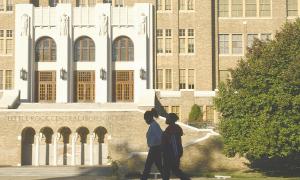
In 1957, nine black schoolchildren enrolled at Central High School in Little Rock, Ark., and compelled the nation to live up to its promise of equality. Fifty years later, Central High's teachers and students revisit the past to help shape the future.
A couple of years ago, an acquaintance who worked at the local college where I was teaching had trouble sending and receiving emails. She couldn’t, for the life of her, figure out why. Then an IT administrator clued her in: Her first name—Gay—triggered the school’s Internet filters. They were set to block any references to homosexuality, gender identity, etc.
As part of our bedtime routine, I was excited to share a new book with my 4-year-old daughter. My Princess Boy by Cheryl Kilodavis would be our story for the evening. We began, as always, by reading the title and looking at the illustrations.
Most students have heard Dr. Martin Luther King Jr.’s “I Have a Dream” speech. They also know of Rosa Parks’ refusal to move to the back of the bus. Unfortunately for many students, knowledge of the civil rights movement stops there.
After teaching a particularly grueling class, I looked forward to the solace of my 55-minute planning period. I started to organize the black hole that is my desk and found a folded piece of notebook paper with my name, Ms. Samsa, hastily scrawled onto it.
The anniversary of the integration of Little Rock’s public schools gives us the opportunity to reexamine the long-term, societal impact of the Supreme Court’s 1954 'Brown v. Board of Education' decision.