During Ramadan, some Muslim students in this educator's school spent time in the media center during lunchtime, but most suffered in the cafeteria. She and her staff worked to change that.
A new third-grader arrives at your school. He is blind. He is autistic. He is developmentally delayed. How does your school deal with the special needs of this child?
It was meet-the-teacher night at my elementary school. The room was ready for a new class of second-graders. The rubric for grading paragraphs and stories was on the wall around the writing center. A scientific method poster hung on the wall in the science corner. Essential questions for numbers and operations were on the chalkboard in the math area. And a picture commemorating the 50th anniversary of Brown v. Board of Education was on the social studies wall. I was ready to help my children become successful students.
Think Aloud requires readers to stop during their reading to think, reflect and discuss their process. Readers talk about skipping text, rereading, searching back in the text for information, questioning, clarifying, summarizing, making connections, reflecting, predicting and visualizing.
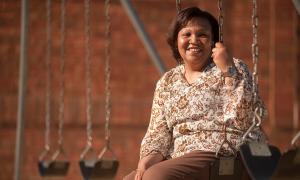
Every school day just after 2 p.m., Sandra pushes her cart into my classroom to clean the bathroom and empty the trash cans. She is the school custodian and my students love her. When students hear her squeaky wheels in the hallway outside our door, they listen for her kind giggle as she enters the room. "Ms. Sandra! Ms. Sandra! Can I help you empty the trash? Can I help you?" they yell out with their hands waving in the air.