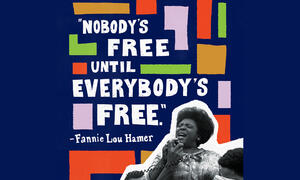
LFJ Director Jalaya Liles Dunn contends that civics should “represent the agency and change of each generation, demonstrating the needs of the time and how people showed up for the collective good.”
A chance meeting of a family of frogs and a family of snakes in the woods one day allows wonderful new friendships to be made. Later, when the siblings tell their parents about their new friends, they are told never to play together again. Find out why in this easy-to-produce play that teaches about the serious topic of prejudice.
In the wake of the Philadelphia Eagles' Super Bowl LII win, this South Jersey teacher looks past the celebration to talk with his students about how some players use their influence to create positive change and to challenge his students to do the same.
1. In the Classroom In your classroom you have the advantage of time and authority. You—working with students—can set community agreements and limits about slurs and hurtful comments. You can interrupt a moment, suspend
In this interview from National Public Radio, host Terry Gross speaks with Imam Rauf about his dream to build a place where Muslims and people of different refligions can go to learn from each other and coexist.
Innovative social inclusion programs are reducing the social isolation of students with disabilities, ending harassment and stereotyping, and improving life opportunities.
Dr. Kathy Swan is a professor of curriculum and instruction at the University of Kentucky. Swan has been a four-time recipient of the National Technology Leadership Award in Social Studies Education, innovating with web-based interactive technology curricula including the Historical Scene Investigation Project and Digital Docs in a Box. She is co-author of the book And Action! Doing Documentaries in the Social Studies Classroom and children’s series Thinking Like A Citizen and co-editor of the book, Teaching the C3 Framework: A Guide to Inquiry Based Instruction in the Social Studies. She is