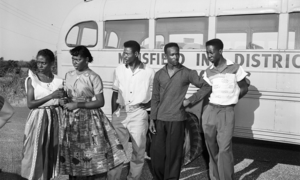
Local history has a profound effect on our communities. It’s up to educators to learn and teach students about the hard history in their own backyards.
In this speech, Alexander H. Stephens justifies the Confederacy’s secession, arguing that the “cornerstone” of the Confederacy is the maintenance of the institution of slavery and the belief in the inferiority of African Americans.
An excerpt from A Whale Hunt, How a Native-American Village Did What No One Thought It Could by Robert Sullivan. This piece is to accompany "Holding Onto Heritage: Native Whale Hunts & Diversity" lesson.
This section of the guide describes three different social justice reading groups. These groups will give you a sense of the different structures and approaches families and communities are using to read and talk about
Resources for Critical Practices Introduction Perspectives by Jalaya Liles Dunn in Learning for Justice Magazine, Fall 2022 Issue Social Justice Standards by Learning for Justice I. Curriculum and Instruction “ What is
This lesson focuses on questions of identity as students read and analyze Angelou’s inspirational poem “Still I Rise” and apply its message to their own lives. Students learn how Maya Angelou overcame hardship and discrimination to find her own voice and to influence others to believe in themselves and use their voices for positive change.