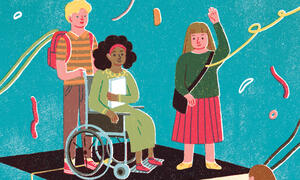
Embracing diversity means accepting disability as a part of the total human experience and being intentional about practices that remove barriers to learning so all children can thrive.
Middle school teachers struggle to find ways to respond to bullying, teasing, name-calling and exclusionary practices among students. We tread lightly sometimes, afraid of saying the wrong thing to the wrong person at the wrong time thus making conditions worse for a bullied student. Being heavy-handed almost never works. Students also know how to say the right thing to adults and then act in a completely contrary way towards peers.
This toolkit for "The Ripple Effect" couples two powerful YCteen stories with the rigorous literacy strategies and tasks from TT's classroom resources.
A couple of months ago, a student pulled me aside to ask for help with a job application. As a teacher working with adult immigrants and refugees, I hear this request fairly often. After class, we discussed the job she wanted –housekeeping for one of the large hotel chains in the area. Paper applications were no longer accepted.
Every morning, Leo's smile brightens the cafeteria at my elementary school. He hobbles in, holding his teacher's hand. His eyes squint at the bright lights. He squirms at loud noises. And always, he smiles.
In this interview, Luis Rodriguez describes how the systemic demoralization he faced in school and society at a young age drove him to join a street gang and how writing his book, Always Running, was an attempt to call his son and other young people in similar situations to change their lives.